Pierre RAZOUX, academic director of the FMES Institute
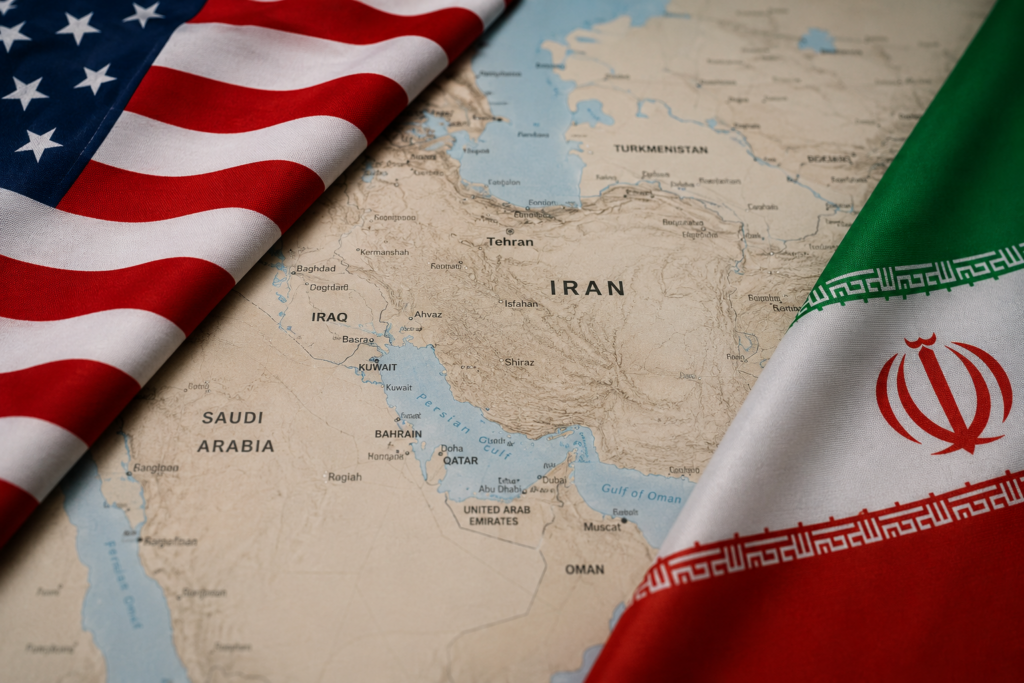
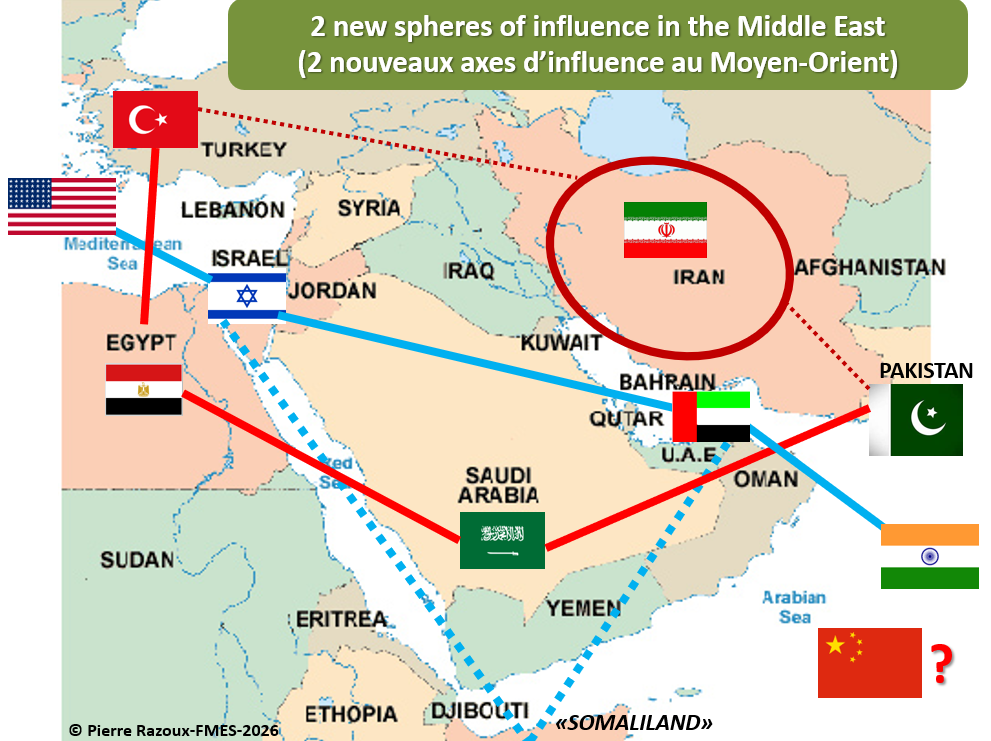
The ongoing war between the United States, Israel and Iran has significantly disrupted the strategic balance in the Middle East. The Iranian regime has survived, adapted and has probably emerged stronger, even though its military and industrial capabilities have been severely weakened as a result of this conflict. The memorandum of understanding signed on 17 June 2026 between the US and Iranian presidents brought hostilities to a temporary halt, opening a window for direct negotiations between Washington and Tehran. Despite strikes on both sides, negotiations appear to be continuing, with each side seeking to demonstrate its strength. Whilst uncertainties surrounding the positions of the United States, Iran and Israel cast doubt on the prospects for diplomatic success, a final agreement is nonetheless possible in the long term, as the White House and the Iranian leadership genuinely need one. Such an agreement would pave the way for normalisation of relations between the United States and Iran. Whatever the White House might have lost in terms of strategic credibility, it would more than make up for it in terms of economic investment, whilst maintaining a deterrent military presence in the region. Nothing is set in stone, therefore. For their part, the Iranians have realised that the international community lacks the military means to prevent them from closing the Strait of Hormuz. Even if an agreement is reached, this threat will remain latent and is likely to inspire other international actors. Several military lessons can already be drawn from this ‘40-day war’, which points to two new axes of alignment in the region: Turkey–Egypt–Saudi Arabia–Pakistan versus Israel–United Arab Emirates–India.
The memorandum of understanding, signed electronically on 17 June 2026 in Versailles by the US and Iranian presidents, marked the start of a 60-day negotiation period which the ongoing strikes have not yet brought to a close[1]. This period, which is renewable, is intended to allow for the conclusion of a final agreement between the United States and the Islamic Republic of Iran. The aim of this agreement is, on the one hand, to bring about a lasting resolution to the Iranian nuclear issue and, on the other, to set out the terms for lifting the primary and secondary sanctions affecting Iran, followed by the establishment of an investment fund of at least $300 billion for the benefit of Tehran. If concluded, this final agreement will bring an end to the military confrontation launched on 28 February 2026 by the United States and Israel against Iran and its regime. It is clearly part of the ‘comprehensive bargaining’ approach sought for decades by several US and Iranian administrations, without success to date (most recently between Presidents Obama and Rouhani). Such an agreement could lead to a complete normalisation of relations between Washington and Tehran, to their mutual benefit. To achieve this, the White House will have to impose its will not only on a section of the US establishment that is hostile to the deal, but also on the Israeli government to prevent it from sabotaging the process. This second condition appears all the more delicate given that Donald Trump tends to lose interest in a subject quickly and move on to the next one, and that Benjamin Netanyahu is accustomed to biding his time until the storm passes. Two further uncertainties remain: will those currently in power in Iran agree to distance themselves from Hezbollah and abandon their perpetual confrontation with Israel in exchange for their reintegration into the international community, thereby enabling their country’s economic development? Are they prepared to amend their legislation to allow US investment, thereby reducing the privileges of the Revolutionary Guards, who now effectively rule Iran?
Nothing is set in stone, even though many are predicting that these negotiations will fail, believing that the Iranians, from a position of strength, would be reluctant to offer such a ‘gift’ to the Trump administration. On the Iranian side, several experts close to the regime believe that the economic situation has deteriorated to such an extent that, for the first time, the inner circle’s loyalists are being directly affected by the collapse in economic activity and the closure of their factories, prompting their protectors to seek an agreement with Washington[2]. History teaches us that, in order to achieve normalisation, two states sometimes decide to go to war first in order to test each other’s strength and then return to the negotiating table with their heads held high. This was the option chosen by Egyptian President Anwar Sadat when he launched the Yom Kippur War against Israel in October 1973. Both belligerents had declared themselves victorious and, in the wake of the conflict, negotiated the famous Camp David Accords, establishing a lasting peace between Egypt and Israel.
What does the memorandum of understanding say?
For the White House, this memorandum of understanding offers Donald Trump a way out to put an end to a crisis that he himself created. From a formal point of view, every word has been carefully weighed up. Taken as a whole, it sets out obligations and reciprocal commitments for both states. The United States and Iran, ‘along with their allies in the current war’ (meaning Israel and the United Arab Emirates on the US side, and Hezbollah and the Houthis on the Iranian side), are to immediately cease military operations on all fronts, including in Lebanon. The text explicitly stipulates that neither party shall initiate any further military operations against the other, with each party undertaking to guarantee the territorial integrity and sovereignty of the other parties, including Lebanon (point 1). This provision therefore makes it very clear that Israel will have to withdraw from the Land of the Cedars. The United States and Iran formally undertake to cease interfering in each other’s internal affairs (point 2); in other words, no further attempts at regime change on one side, and no further attacks or hostage-taking on the other.
The United States shall begin the immediate lifting of its naval blockade and undertake, within 30 days of the final agreement, to withdraw its ‘proximity forces’ from around Iran. This very vague term most certainly encompasses carrier strike groups and ground and air reinforcements, but it says nothing about the US peacetime deployment in the region (point 4). For its part, Iran shall reopen the Strait of Hormuz to commercial shipping without hindrance and shall clear the strait of mines and remove any technical and military obstacles that were impeding traffic. It shall refrain from levying any transit fees for the duration of the negotiations (point 5). At the same time, Iran is authorised to define, together with the Sultanate of Oman, the future arrangements for the administration of the Strait in consultation with the states bordering the Persian Gulf.
The United States has committed to immediately returning a portion of Iran’s frozen assets (point 11). Once the final agreement has been concluded, the remainder of the frozen assets will be returned and the United States will lift all primary and secondary sanctions against Iran (point 7). It will set up an investment fund of at least $300 billion ‘with regional partners’ (i.e. the Gulf monarchies) to contribute to Iran’s reconstruction and economic development (point 6). As it stands, this clause leaves room for doubt as to the United States’ ability to authorise, on a case-by-case basis, the licences and financial transactions relating to each investment. These investments hold promise in the energy, aviation and technology sectors.
The Iranian authorities reaffirm that they will not seek to acquire or develop nuclear weapons, but this was already officially the case previously. Uranium that has already been enriched will be diluted on site under the supervision of the IAEA. This was agreed between the US and Iranian negotiators as early as mid-February 2026. Maintaining a minimum enrichment capacity linked to Iran’s nuclear needs will also be at the heart of the negotiations (point 8).
Throughout the negotiations, both parties shall maintain the military status quo. During this period, Washington shall authorise Iranian oil exports without any restrictions, including banking restrictions (point 10).
Washington and Tehran must agree on an enforcement mechanism to monitor the final agreement (point 12) and, should it come into being, this will be endorsed by a binding resolution of the United Nations Security Council (point 14).
No mention is made of Iran’s ballistic missile programme, nor of Iran’s proxies (Hezbollah, the Houthis, Iraqi Shia militias). On balance, in exchange for significant concessions on the nuclear front, Iran has secured most of what it has been seeking for years. The chief negotiator for the Iranian side expressed his optimism by stating, ‘Everything we previously sought to achieve by military means, we have obtained to a far greater extent through negotiation’[3]. So much so that this memorandum of understanding has been described as a ‘divorce letter between the United States and its Gulf allies’[4]. In the Gulf monarchies, the prevailing view is that Iran has emerged victorious from the confrontation, even though it is not yet over.
For their part, the Israelis are very concerned, as several security officials have suggested[5]. In the United States, John Bolton, former National Security Adviser during Donald Trump’s first term, who is labelled a ‘hawk’, states unequivocally that this memorandum of understanding ‘is a major defeat for the United States following the substantial military gains achieved on the ground; it was not the right response, as it ignores the threat posed by drones, missiles and proxies, and remains very vague on the nuclear issue; even if this agreement benefits Donald Trump domestically, the strategic repercussions for the United States will be negative’[6].
Nothing is therefore guaranteed at this stage, particularly as the Iranians and Americans continue to test each other’s resolve by carrying out sporadic strikes on both sides. It is therefore advisable to remain cautious during this transitional phase, which will serve to test how the American and Iranian systems will assimilate or challenge the agreed terms.
What are the key military observations?
The aim of this section is not to recount the various phases of the war, but to attempt to draw initial lessons of military significance. The Lebanese front between Israel and Hezbollah has deliberately been excluded from this analysis, as it follows a different political and operational logic. The US operation ‘Epic Fury’ and the Israeli operation ‘Roar of the Lion’ were examples of multi-domain operations. The United States and Israel carried out intensive strikes against Iran for nearly two months from the air, at sea (cruise missiles) and on land (ATACMS and HIMARS missiles): 10,800 Israeli strikes and over 14,000 US strikes. They mobilised their space, cyber and information warfare capabilities, as well as their diplomatic network, and deployed their special forces on the ground, including within Iran. The successful exfiltration of the pilots of the American F-15E shot down in south-western Iran (4–6 April 2026) will most likely remain a textbook example of its kind; it erases the memory of the failure of the operation to free American hostages in April 1980 (Operation ‘Eagle Claw’). There is no doubt that it will be glorified by Hollywood.
For its part, and during the same period, Iran retaliated by firing nearly 1,200 ballistic missiles (half at Israel and the other half at the Gulf monarchies and US bases in the Middle East) and more than 5,000 drones (a third of which were directed solely at the United Arab Emirates). It should be noted that the Iranians, like the Russians, have become masters in the art of combining different delivery systems (drones and ballistic missiles) to create diversions and deceive the enemy. The Israelis claim an interception rate of 92 per cent, which means that around fifty Iranian missiles are believed to have succeeded in penetrating their missile defence shield, particularly towards the end of the hostilities when the Revolutionary Guards deployed their most advanced missiles[7], believing that Israeli stocks of interceptor missiles were at their lowest.
1) To win, it is necessary to have a clear and coherent strategy, sufficient time, and appropriate strategic communication. It must be noted that the United States and Israel changed their objectives on several occasions and were not in sync either on the pace of operations or on their communication strategy. Conversely, Iran adopted a strategy of attrition and harassment that was undeniably effective and never deviated from it, even whilst suffering significant human losses[8], considerable damage to its territory, and the loss of its ‘conventional’ navy, its air defence systems and a large part of its air force[9].
2) It is necessary to develop low-cost weapons to counter the sheer volume of attacks. During the six weeks of intensive air strikes, the US armed forces used up a significant proportion of their stocks of high-tech munitions, as illustrated in the table below. This demonstrates that the procurement of this type of munition is now a matter of necessity in terms of effectiveness, to secure victory and avoid defeat.
| Stock as at 27 February 2026 | Ammunition fired | Stock as at 17 April 2026 | Percentage used | |
| JASSM (AGM-158) stealth cruise missiles | 4 400 | 1 200 | 3 200 | 27 % |
| Tomahawk cruise missiles | 3 100 | 1 100 | 2 000 | 35 % |
| Patriot surface-to-air missiles | 2 330 | 1 130 | 1 200 | 48 % |
| SM-6 surface-to-air missiles | 1160 | 260 | 900 | 22 % |
| SM-3 anti-missile missiles | 410 | 130 | 280 | 32 % |
| THAAD anti-missile missiles | 360 | 190 | 170 | 53 % |
Sources : CSIS & Council of Foreign Relations.
This over-consumption has three distinct consequences. The first is financial: how can one justify, in the long term – given that the argument is tenable on an ad hoc basis – spending several million dollars on missiles to destroy a drone worth 35,000? This is why the French forces that intervened in the Gulf during the hostilities adapted their tactics by using much less expensive munitions to destroy the Shahed suicide drones targeting the United Arab Emirates. They shot down more than a hundred drones, enabling at least five Rafale pilots to claim the title of ‘Ace’, as they each shot down at least five drones. The armed forces will need to rapidly equip themselves with innovative anti-drone capabilities, prioritising ingenuity and low cost.
The second consequence is operational in nature: quality no longer systematically compensates for quantity. A large number of cheap effectors makes it possible to harass the enemy by forcing them to deplete their stock of defensive assets. There is no doubt that the Russians, the Chinese and the North Koreans, who view the world as a global front, will adapt and produce a large number of cheap, robotised effectors to overwhelm the defences of their strategic rivals[10]. The third consequence, of a strategic nature, is linked to the second: how will the United States maintain sufficient stocks to cope with a major conflict with China, particularly in defence of Taiwan or Japan? There is no doubt that this factor most certainly played a part in the US decision to suspend hostilities. According to several experts, it will take the United States at least three years to replenish its stocks, provided it does not become involved in any further conflicts, thereby opening a window of opportunity for its systemic adversaries[11]. The Pentagon has already signalled its intention to quadruple the production rate of Patriot PAC-3MSE, PRSM and THAAD missiles[12]. On the Israeli side, the information blackout remains tight, and it is impossible to assess the stock of ready-to-use interceptor missiles. All the evidence suggests that these stocks were low when the ceasefire came into effect.
3) Forward military bases are vulnerable. The Revolutionary Guards retaliated against US aggression just as they had said they would, striking the 16 US bases in the Middle East. They caused varying degrees of damage. US officials, no doubt overconfident, had not protected them adequately[13]. The Iranians also struck French bases (in the UAE), British bases (in Cyprus) and Turkish bases, demonstrating that no base in the region was safe. The message was directed at their Arab neighbours: the presence of foreign bases on your territory does not shield you from Iranian strikes; they attract them just as lightning rods attract lightning. Iranian strategists have indicated that Gulf States wishing to forge a fruitful relationship with Iran following this conflict will need to give priority consideration to the continued presence of US bases on their territory[14].
4) Irregular warfare has become navalised and internationalised. Unable to effectively confront its adversaries’ forces over its own territory, even though its air defence system managed to shoot down and severely damage several American and Israeli aircraft[15], Iran has devised a technique of irregular warfare that is no longer centred on its own territory, but is resolutely directed towards that of its neighbours and out to sea. Iranian strategists have succeeded in shifting the centre of gravity of this war outside Iran in order to increase international pressure on its aggressors. The aim is to target maritime traffic, insurers, customers, the cloud and data centres, the flow of ammunition and energy, but above all confidence in its protector[16]. We had not realised that the Iranians could actually wield this double-edged economic and diplomatic weapon, which is probably more effective than the threat of crossing the threshold into military nuclear capabilities.
5) It is very easy to block a strait, even with relatively rudimentary military means (‘mosquito fleet’, drones of all types, mines, easily concealable missile batteries, suicide attacks). Shipping companies that have attempted to break the blockade have learnt this the hard way. It is possible that the Chinese president has drawn the following lesson from this, which could apply to Taiwan in the future: an air and naval blockade is ultimately more effective strategically than a massive attack, the outcome of which is, all things considered, highly uncertain.
6) Lessons learnt (RETEX) are vital and must be drawn very quickly. Those who gain the upper hand are often those who have learnt the lessons from their failures more quickly. In this instance, the Iranians analysed their mistakes from the 12-day war of June 2025 more quickly and drew the necessary conclusions. This process accelerated in January 2026 following the wave of repression against popular protests, as they anticipated a US-Israeli response. As Vali Nasr, one of the foremost experts on the Iranian system, points out, ‘the Iranian generals demonstrated that they knew how to learn quickly from their failures. They made far-reaching changes to their organisation and procedures, and by February 2026, they were ready to withstand the impact of a new air campaign and had prepared to retaliate’[17].
What about information warfare?
Whilst, paradoxically, Israel and Iran had demonstrated relative transparency during the 12-day war of June 2025, with each side releasing numerous details of their military operations, this time the belligerents have kept even the slightest operational information tightly under wraps. They have prioritised censorship and systematic disinformation aimed at weakening the enemy on the international stage. The information war has emerged as a priority front, with international public opinion as a prime target. The United States and Israel have sought to convince the world that the Iranian regime is on the brink of collapse; Iran has endeavoured to portray the isolation of American and Israeli decision-makers, and the scale of the losses their military installations are said to have suffered. The Iranian regime chose to permanently cut off the Iranian population’s access to the internet, but its propaganda services flooded social media with short, humorous videos highlighting the failure of American and Israeli strategies, openly parodying the US president’s communication methods.
As soon as Ali Khamenei was eliminated, the Iranian regime promoted a new doctrine of cognitive warfare entitled ‘Meydân (a concept referring to the idea of resistance), street, diplomacy’ to transform the Supreme Leader’s death into a ‘popular resurrection’ through a series of ‘tactical concessions’ designed to flood the international media with idealised images whilst appeasing the population[18]. Once the ceasefire came into effect, the ‘public safety committees’ loyal to the regime continued to man the junctions of the main avenues at night to deter any popular demonstrations. At the same time, food distributions were organised, concerts and street performances multiplied, stadiums were opened to women – including those no longer wearing the hijab – greater tolerance towards alcohol appears to be in place, imprisoned singers have been released, and women are set to be allowed to ride motorbikes, a taboo since the Islamic Revolution. Iranian embassies around the world have been instructed to convey reassuring messages and to widely circulate the regime’s propaganda videos. For her part, Mai Sato, the UN Special Rapporteur on human rights in Iran, notes that repression has not abated and that the number of executions is rising sharply. From the perspective of the Iranian leadership, the relaxation of behavioural norms is disconnected from the concept of democratisation, which the regime rejects. The message, in the Chinese style, could be summarised as follows: ‘get rich, do what you like at home, but don’t get involved in politics’.
What impact will this have on the Iranian regime?
Despite five weeks of intensive strikes, the elimination of Supreme Leader Ali Khamenei and the neutralisation of the highest echelons of power, the Iranian regime has survived, adapted and even grown stronger. Whilst it has suffered severe blows, particularly on the military and economic fronts, the regime has withstood the onslaught from the world’s most powerful army. This success stems from a multi-layered defence system, a redundant and decentralised organisation, meticulous preparations undertaken well in advance, a patriotism that has been vastly underestimated, and a system of delegated responsibilities that allows for the immediate replacement of neutralised senior leadership. This success has strengthened the population’s nationalist spirit in the face of external aggression, even though they remain as critical of the regime as ever. The Iranian people have, in fact, come to terms with three realities: 1) The United States and Israel did not intervene to save them; 2) These two states have no intention of becoming involved in a long and costly ground war, the most effective means of bringing down a regime; 3) The regime has retained the bulk of its repressive apparatus and will prove ruthless in the event of a new uprising. It is therefore highly unlikely that the Iranian people, whose hopes of international support have been dashed, will take to the streets to demonstrate again in the short term. It is undeniably the biggest loser in this war. By failing to condemn the outrageous insults hurled by the US President at the Iranian people at the start of the war, Reza Pahlavi, the heir to the Shah of Iran who has taken refuge in the United States, has lost the credibility he seemed to have gained at the start of the protests (December 2025). For their part, Arab public opinion is showing widespread support for Iran, which has demonstrated its ability to stand up to Donald Trump and Benjamin Netanyahu.
The Supreme National Security Council, dominated by the Revolutionary Guards, has undeniably taken advantage of the elimination of the Supreme Leader and his entourage to seize real power, even though it has taken great care to spare certain clerics[19]. The Pasdaran generals have appointed a new Supreme Leader of their own choosing. Mojtaba Khamenei, son of the previous Supreme Leader, lost his wife and part of his family in the US-Israeli strikes. He serves as both a religious figurehead and a lightning rod for them, drawing the wrath of the American and Israeli secret services upon himself, as well as a scapegoat, for if everything were ultimately to collapse, ‘it would be his fault’ and the regime might choose to sacrifice him to save what can still be saved. Mojtaba Khamenei, who was seriously injured, has not yet reappeared and has not delivered any public speeches, communicating only in writing. All the evidence suggests that he is alive, in hiding, and involved in major decisions[20]. His role has evolved: he is no longer the ultimate arbiter of decisions, but one of the influential members of a much more horizontal power structure centred on the security apparatus. The clergy have lost much of their influence, although they retain significant financial power through the religious foundations they administer. As the Iranian researcher Hamidreza Azizi points out: ‘Pragmatism has returned to the Iranian system, which has become more collective […] Iranian leaders are once again confident in their capacity for resistance and have discovered new levers of power (the closure of the Strait of Hormuz and their ability to strike at the Gulf monarchies without much international reaction)’[21]. The new leaders who have just come to power as a result of the war do not intend to defend the revolution in the same way as their predecessors; they are there to govern their country, profit from it and deter their adversaries. They are younger, pragmatic, fundamentally nationalist and have an excellent understanding of Iran’s strengths and vulnerabilities[22]. They no longer ask citizens, ‘Are you sufficiently loyal to the Islamic Revolution?’, but instead ask them, ‘Are you sufficiently Iranian?’[23] .
In fact, the regime has probably transformed itself into a de facto junta that does not call itself by that name. The most prominent figure in this regard is Mohammed Baqr Qalibaf, Speaker of Parliament, who openly assumes the role of chief negotiator for the Iranian side. An unsuccessful candidate in several presidential elections, a former commander-in-chief of the Revolutionary Guards and a former mayor of Tehran, Mr B. Qalibaf is a pragmatic conservative who has forged a tactical alliance with the President of the Republic, Massoud Pezeshkian, who is labelled a reformist and close to the people. However, it is Generals Mohammad Baqr Zolghadr, head of the Supreme National Security Council, and Ahmad Vahidi, commander-in-chief of the Pasdaran, who play a key role behind the scenes. Foreign Minister Abbas Araghtchi, who is very close to the Revolutionary Guards, represents the technocratic wing of the regime.
The Iranian regime therefore appears to be gradually sliding towards a Pakistani model in which the military (the Revolutionary Guards, in this case) monopolise most of the power but share it with a hand-picked civilian political class that is loyal and interested in the system’s perks. It is perhaps no coincidence that Pakistani leaders have gone to such lengths to act as intermediaries for their neighbours, who are coming to resemble them more and more with each passing day.
What are the economic and legal consequences?
The three-and-a-half-month blockade of the Strait of Hormuz has severely disrupted oil and gas flows and led to a significant rise in hydrocarbon prices. Asia has been hit hard, particularly Japan, South Korea, the Philippines and Taiwan[24]. India has been hardest hit in terms of gas supplies[25]. Africa suffered from the blockade of certain petroleum products, particularly fertilisers, which affected production, agricultural prices and, consequently, food security in Africa[26]. Europe and the Americas saw their oil and gas bills soar, but they were never at risk of a supply disruption.
The aviation sector was severely disrupted (sharp rise in fuel prices, logistical difficulties, collapse in passenger numbers) by this war, which had the immediate effect of closing off a significant portion of the airspace over the Middle East, grounding numerous European and Gulf airlines as a precautionary measure. For its part, Turkish Airlines has increased its flights to Asia and certain Middle Eastern capitals, notably Riyadh and Muscat, to transport the many stranded passengers. The airline has undeniably capitalised on this conflict to expand its customer base and boost its earnings[27]. It will be in a strong position to negotiate potential partnerships with Middle Eastern companies.
Maritime transport has also been severely affected for more than three months by the blockage of several hundred ships in the Persian Gulf and at the entrance to the Strait of Hormuz, as well as by rising fuel, insurance and freight costs, and by the imposition of a toll by the Iranians, which has gradually been rebranded as a ‘service charge’. This precedent could inspire a number of countries bordering other strategic straits (Malacca, Bab el-Mandeb, the Mozambique Channel and, why not, Gibraltar, the English Channel and the Skagerrak in Europe). These countries might be tempted to impose their own transit fees, in breach of international law. By opening Pandora’s box, the blockade of the Strait of Hormuz has helped to further undermine international law, particularly the law of the sea. The UN and its Security Council have, moreover, been completely absent from this conflict, illustrating the decline of the rule of law and the pre-eminence of the use of force.
It is, however, in the field of investment linked to tourism and international trade that the impact of this war could be most lasting, as the Gulf monarchies have demonstrated that they are unable to defend themselves and guarantee the physical security that was one of their main attractions in the eyes of investors. In this regard, the soft power of the United Arab Emirates and Qatar has been severely undermined, as demonstrated by the insightful study by the German Marshall Fund[28].
It is still too early to say whether this trend will also affect investment in cutting-edge technology (artificial intelligence, data centres, software and cryptocurrencies), but for the time being, Asian, American and European investors are being very cautious[29], whereas the Arabian Peninsula was seen as a land of opportunity as recently as six months ago.
What are the geostrategic prospects?
The war between the United States, Israel and Iran has significantly altered the strategic balance in the Persian Gulf region and the Arabian Peninsula. The states that have suffered reprisals from Iran have been able to rely on the defence provided by the United States (and by France in the case of the UAE, Qatar and Jordan), but have found that this defence was not sufficient to shield them from Iranian strikes. These same states have realised just how extremely vulnerable they are. In this respect, the Gulf monarchies appear to be the losers in this war, which is forcing them to reconsider the region’s security architecture. The UAE has distanced itself from its Arab neighbours and withdrawn from OPEC to regain complete freedom in terms of oil exports. It is determined to increase its strategic independence by relying on new, more credible partners. For its part, Saudi Arabia appears untroubled, as it possesses strategic depth, a critical mass (in terms of population and oil resources), the capacity to export its hydrocarbons via the Red Sea through its Petroline pipeline, substantial revenues from the pilgrimage to Mecca (which will continue regardless of the circumstances), and privileged relations with Pakistan and the United States. Whilst the latter are perceived as unpredictable troublemakers and are now considered unreliable, they nonetheless remain the ones with unrivalled military power in the region.
China has disappointed regional players who had forged strategic partnerships with it, as they realised that Beijing had no intention of becoming militarily involved in the Middle East. Beijing primarily uses Pakistan as an intermediary, particularly for the export of Chinese-made military technology. Nevertheless, China has provided Iran with intelligence and satellite imagery that have enabled Tehran to target its objectives and assess the damage inflicted more effectively. There is no doubt that the torpedoing of the Iranian frigate Dena by the nuclear-powered submarine USS Charlotte (4 March 2026) off the Chinese base at Hambantota in Sri Lanka was perceived by Beijing as proof that the US Navy was capable of cutting off its lines of communication in the Indian Ocean, thereby preventing the shipment of Chinese equipment by sea. Similarly, those states that maintained military cooperation with Russia realised that the Middle East was merely a peripheral front for the Kremlin, which was focused on its war in Ukraine.
Turkey is emerging more than ever as a key player at the crossroads of the Middle East and NATO’s southern flank, as evidenced by the Alliance’s summit in Ankara on 7 and 8 July 2026. By demonstrating its neutrality in the Middle East and its solidarity with NATO, Turkey, which aspires to become a leader in the Near East, could capitalise on the chaos to take the lead on the region’s major issues. Further south, most of the other regional players have come to terms with the fact that they find themselves isolated and that they need to devise new networks of influence to defend themselves. We will, of course, have to wait for the dust to settle to see things more clearly, but it is already possible to identify two new axes of convergence. The first links Saudi Arabia to Pakistan, Egypt and Turkey, even though relations were strained between Riyadh and Ankara, as well as between Ankara and Cairo. The leaders of these three countries have, however, shown themselves to be pragmatic. All accounts point to their spectacular rapprochement. On the other side, Israel and the UAE have forged a genuine informal alliance which they are attempting to extend to India, which is concerned about Pakistan’s increasingly visible role in the Middle East. This second axis of influence is in line with the IMEC (India-Middle East-Europe Corridor) economic project, which is being strongly promoted by India and the UAE. Israeli and Emirati leaders have come to the same conclusion: in the long run, the alliance with the United States will come to an end, and preparations must be made for what comes next. This new landscape calls into question the long-term positioning of the United States and China and puts those states that value their neutrality in a difficult position, starting with the Sultanate of Oman, which finds itself, despite itself, at the crossroads of these two spheres of influence.
Paradoxically, this war has paved the way for the appointment of a new Iraqi prime minister as a compromise candidate, following months of political deadlock[30].
What are the possible scenarios going forward?
1) Washington and Tehran eventually reach a final agreement, even if this may come well after the two-month deadline set out in the memorandum of understanding, as it is extendable. This is the ideal scenario for the United States and Iran, which can begin a gradual normalisation process leading ultimately to the restoration of diplomatic relations. In the meantime, US companies can invest heavily in Iran, stealing a march on their European rivals and curbing the expansion of Chinese and other Asian firms. The Iranians can play off competitors against one another and pursue the ‘multi-alignment’ strategy they have long sought. This could be good news for the Gulf monarchies, which are also encouraged to invest heavily in Iran. It is, however, bad news for China and Russia, as well as for Israel, which finds itself even more isolated – unless the Iranian regime decides to effectively abandon Hezbollah, in which case this new situation could facilitate a rapid normalisation of relations between Israel and Lebanon, and subsequently enable the Israeli government, whichever it may be, to approach its relations with Iran under a new paradigm. This highly optimistic scenario could, however, be derailed for all the reasons outlined in this article, but also because of US lawmakers. If they win the mid-term elections in November 2026, the Democrats might be tempted to oppose the lifting of sanctions against Iran in order to further weaken Donald Trump.
2) The ‘decay’ scenario,which seems to be prevailing at present. Given the inability of the White House and the Iranian regime to agree on the necessary concessions on both sides, the United States is maintaining its naval blockade and tightening sanctions, whilst Iran continues its strategy of harassment. Both sides are being drawn into skirmishes. This status quo is degenerating into a low-intensity conflict, but remains below the threshold of escalation into a new open war. US technological and military superiority is offset by the resilience of the Iranian system. For its part, Israel is intensifying its covert war against Iran and stepping up strikes against Hezbollah in Lebanon. This smouldering conflict may continue for as long as it remains bearable for both sides and as long as the Iranian regime can hold out economically.
3) The rapid escalation towards another major war. Everything suggests that, at this stage, the White House has no desire to embark on another war that would put it at odds with its Asian and Gulf partners. However, faced with the intransigence of the Iranian regime, resistance from the US establishment and pressure from Israel and its allies in Washington, the United States is tightening its air and sea blockade, imposing new, very strict sanctions against Tehran, deploying fresh reinforcements to the region and intercepting ships bound for Iran. For its part, the Iranian regime, convinced that the balance of power is in its favour, is putting pressure on the Gulf monarchies, regularly attacking US bases and stepping up its support for Hezbollah to the point of provoking a further escalation with Israel in Lebanon. The mid-term elections are over, Benjamin Netanyahu has been re-elected in Israel, and Donald Trump is seeking to enhance his legacy. The White House, backed by Israel and the United Arab Emirates, opts for further massive strikes, this time prioritising the regime and the economy, in the hope of hastening the collapse of Iranian power.
[1] Texte intégral de l’accord en 14 points conclu entre les États-Unis et l’Iran – TIME France
[2] Interviews with the author.
[3] Interview with Mohammed Baqr Qalibaf, IRIB, 17 June 2026.
[4] To quote an Omani expert met in Muscat, 9 July 2026
[5] « Des jours très difficiles nous attendent », I24 News, 18 June 2026.
[6] Interview with John Bolton on the Bloomberg television channel, 18 June 2026 ; https://www.bloomberg.com/news/videos/2026-06-18/iran-deal-a-real-defeat-for-the-us-john-bolton-says-video
[7] In particular, manoeuvrable missiles fitted with fragmentation warheads to increase the number of civilian casualties.
[8] Depending on the source, between 4,000 and 6,000 Iranians are reported to have been killed (40 per cent of whom were civilians) and a further 26,000 wounded. For their part, the United States reports 16 killed and 550 wounded, whilst Israel acknowledges 52 deaths (mostly civilians) and more than 7,500 wounded (mainly as a result of Iranian ballistic missile strikes on Israeli territory).
[9] The Iranian Air Force is reported to have lost 24 fighter aircraft (10 J-7s, 3 F-14s, 3 Su-24s, 2 Su-22s, 2 F-4s, 2 F-5s, 1 Yack-130 and 1 P-3 Orion), 17 transport aircraft and 2 MALE drones.
[10] Michael Doran, « Seven lessons of the Iran War », Strategika, 1st June 2026.
[11] In particular Neda Bolourchi, « Modern War: Ten takeways from the Iran War », (op. cit.) et Max Boot, « The Iran War’s hard lessons », Council of Foreign Relations, 22 June 2026.
[12] Laurent Lagneau, « Lockheed Martin a signé un contrat de 35 milliards de dollars avec le Pentagone pour quadrupler la production de missiles THAAD », Opex360, 26 June 2026.
[13] Caitlin Talmadge & Mara Karlin, The end of the American way of war? Brookings Institution, 10 June 2026.
[14] Points raised during a closed-door seminar organised via videoconference by the IPIS think tank from Tehran, on the 29th of April, 2026.
[15] The US Air Force lost a total of 1 E-3 AWACS aircraft, plus 1 other damaged; 3 in-flight refuelling aircraft (2 KC-135s and 1 KC-46), plus three others damaged; 5 fighter aircraft (4 F-15Es, 1 A-10) plus 1 F-35 stealth fighter that was very heavily damaged, 2 transport aircraft, 11 helicopters and 31 MALE drones; some of the manned aircraft were destroyed during strikes against US bases. The Israeli Air Force lost 22 MALE drones over Iran.
[16] Neda Bolourchi, « Modern War : Ten takeaways from the Iran War », Modern War Institute, 22 June 2026.
[17] Vali Nasr & Narges Bajoghli, « Iran’s new grand strategy », Foreign Affairs, 3 June 2026.
[18] Negar Askaran, « Le régime iranien a une nouvelle doctrine », Le Grand Continent, June 2026.
[19] In particular, Gholamhossein Mohseni Ejeï, head of the judiciary.
[20] This is evidenced by the growing number of officials who have spoken to him directly and are giving details of their meetings in the Iranian press.
[21] Hamidreza Azizi interviewed by Armin Arefi, « En Iran, le système est devenu beaucoup plus horizontal », Le Point, 23 June 2026.
[22] Vali Nasr, « Iran’s new grand strategy », op. cit.
[23] Ibidem.
[24] Emmanuel Lincot, Ormuz, un accélérateur de tendances pour l’Asie du Nord-Est, FMES, May 2026.
[25] Olivier Da Lage, L’autonomie stratégique indienne à l’épreuve de la guerre d’Iran, FMES, May 2026.
[26] « Ormuz, la crise invisible des engrais », Mondafrique, 26 April 2026.
[27] Juergen Steinmetz, « Turkish Airlines devient une bouée de sauvetage pour l’aviation mondiale après l’arrêt des opérations des compagnies du Golfe », ETurboNews, 18 March 2026 ; Turkish Airlines devient une bouée de sauvetage pour l’aviation mondiale après l’arrêt des opérations d’Emirates, Qatar Airways et Etihad.
[28] Dalia Ghanem, The end of the Gulf’s gilded age? GMF, 1st April 2026.
[29] « La guerre au Moyen-Orient menace les investissements IT », Le Monde informatique, 9 April 2026.
[30] Olivier Passot, « Ali al-Zaïdi, premier ministre d’un Irak ingouvernable ? », FMES, 25 June 2026.