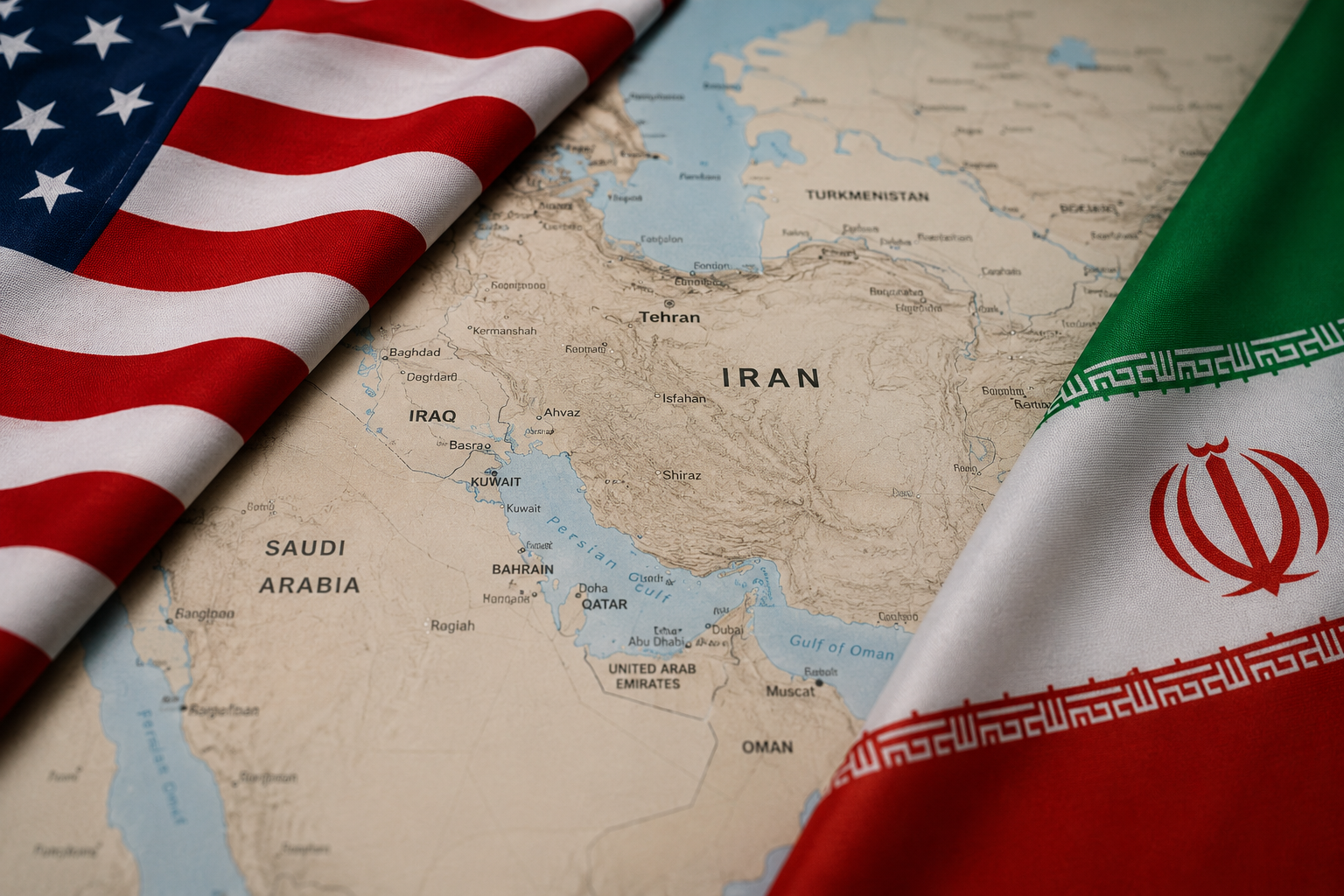
We all see it: the world is becoming increasingly brutal, as if devoid of faith or law. Even if the wars in Ukraine, Israel and Gaza, Syria, Sudan, and Iran are not fundamentally more violent than those of the 20th century, what strikes the observer is the complete lack of inhibition among protagonists in their use of force. None of the actors involved seeks to burden themselves with moral or legal justifications beyond mere formality.
This absence of pretense illustrates the predatory logic that now prevails everywhere. It seems that the only question that matters is: how to gain advantage or avoid losing too much with these new rules of the game? As Donald Trump claims with his talent for sensing the zeitgeist: “No more mister nice guy.”
For European nations, educated in propriety and respect for rules, the shock is severe. How do they adapt to this brutalization? Reject it at the risk of becoming prey and disappearing geopolitically, or join the predators at the risk of losing their soul and disappearing culturally?
For Europe, this new world takes the form of a difficult awakening that catches it off guard.
Since 1945, after three Franco-German wars in three generations, including two world wars and the Holocaust, Europeans, horrified by this self-destruction, had decided in principle to renounce state violence among themselves. They thus completed an intellectual and political evolution initiated three centuries earlier, following the terrifying religious wars that had also devastated the continent for decades.
Modern Europe thus rebuilt itself in the middle of the 20th century around a triptych later described as post-historical: the marginalization of religious matters, the delegitimization of nationalism, and the replacement of power relations by norms, law, and the market. The European Union, as a political construct, was the fruit of this evolution.
The objective was achieved. Europeans, weary and afflicted by their guilt and sense of failure, succeeded in eradicating civil war on their continent and gradually abandoned the principle of resorting to violence.
The fall of the USSR
This “principled pacifism” was not, however, self-evident in the decades after the war when the Soviet threat was consolidating in Western Europe. The dilemma was resolved thanks to protection provided by the United States, which, in addition to its economic, industrial, and military power, was not affected by the repulsion toward war that had spread across the Old Continent.
On the contrary, the majority of the American population, removed from European troubles, maintained throughout the century the sense of being a dynamic nation, morally intact and convinced of belonging to the side of good, which authorized them to contemplate the use of force without inhibition. This confidence and lack of inhibition were among the driving forces that allowed them to become “the” Western superpower since 1945 and, from the 1990s onward, the global hyperpower with no real competitor.
The fall of the USSR reinforced both transatlantic partners in their respective approaches. Europeans, seeing their last threat disappear, convinced themselves that they had definitively entered a new era where state violence would become residual and eventually superfluous. Americans, for their part, saw in it the righteousness of their imperial model and the interest in extending it. Globalization thus became an opportunity for Washington to promote its hegemony founded on commerce, rules, and the American model.
This post-Cold War period was, however, marked by a harmful ambiguity. The term ‘Western’ indeed encompassed two antagonistic visions: the promotion, on one hand, of a universalist and pacifist European model, and the reality, on the other hand, of an international system controlled by a state that was moving away from Europe and had retained a taste for force. Europeans, ill at ease, preferred to let things happen because it was the price of their peace. French isolation during the 2003 Iraq War illustrated this.
Outside Europe, resistance to the empire was not long in coming. First, because this indifferentiation of societies creates unstable equilibrium and remains a source of mimetic violence, as René Girard so aptly identified. Second, because the tools of economic and military power have spread everywhere, allowing the ‘small’ to stand up to the ‘great’. Finally, because the American hegemon could not resist the temptation to impose its rule and the defense of its interests by force.
Globalization, which was supposed to be integrative and pacifying, thus led to globalized fragmentation and generated revisionist powers, both large and small, everywhere. Return of identities, alternative models, and national interests. Also a return to the use of military force both because the European framework is crumbling and because military capabilities are now dispersed.
If this surge in contestation and conflict is a challenge for the United States, they are ready for it because it is a logic they have never abandoned. Europeans are less comfortable with it. They had renounced power dynamics, they disarmed themselves intellectually, materially, and morally even as they are the target of the United States and their competitors from the East and South for whom they represent the ideal target: wealthy, indifferent, idle, old, weak, cowardly, and sanctimonious.
Being at the table and not on the menu
We Europeans are thus waking up in a world that is not ours. Confronted with antagonism and vulnerability, we are beginning to realize that our neighbors wish us ill and could succeed. What to do? The temptation to go back to sleep, to protest, or to seek a protector exists, but will quickly run up against the misfortunes that befall the vanquished and the subjugated. In the world that is coming, marked by scarcity and predation, defeat and subjugation will bring their share of suffering.
This is why we see hardening positions everywhere. Tit for tat, seizing psychological advantage, striking first, threatening devastating retaliation…
Many are doing so or preparing to do so in their own way. Europe cannot escape the overhaul of its software for managing international relations; its survival depends on it. It must rearm itself, conceptually, materially, and above all psychologically, to be stronger and more credible, to be at the table and not on the menu. Europe must become a power again, which requires considerable strengthening of the states that compose it, because European strength cannot be created by adding up the weakness of each. France has much to do on this subject.
Soft power
But once this power is recovered, must Europe become predatory to have weight among predators? It is not in its interest to do so. Europe has long benefited from a strategic advantage tied to the attractive force of its cultural model, which is more peaceful than elsewhere.
This singularity is not by accident. It is the fruit of history and its sufferings. Because it has experienced the horrors of war in its very flesh, it has developed a specific approach built on listening, respect, and compromise. This software worked wonders in bringing peace to the continent. It failed elsewhere because it was not backed by sufficient power.
While the United States plunges into a vicious cycle of military escalation, ‘without mercy and without compassion,’ to use the words of its secretary of state for war, following the example of Russian, Israeli, Turkish, Azerbaijani, Iranian leaders, Hamas or Hezbollah, among so many others, there is another path for Europe and for France.
If they decide to re-engage in the game of powers and provide themselves with the means to do so, they could then make heard the credible voice of an ‘Old Continent,’ to borrow the phrase from Dominique de Villepin that struck a chord during the Iraq War. France and Europe are therefore not forced to choose between pacifism and warmongering. They could combine the power of force – economic, military, and moral – with the power of their model, the famous soft power theorized under the Clinton administration by Joseph Nye, which the United States is turning away from. We must therefore undertake a twofold movement, apparently contradictory.
First, we must rebuild genuine power, a hard power, to have weight and be feared. The budgetary and societal efforts this requires mean that, since we live in a democracy, we must secure the support of our populations and thus rebuild cohesion within our political communities, both national and European.
This cohesion, which could seem unnecessary in a post-national world without borders managed by the simple market, becomes essential in an era of the return of geopolitics. We must thus rediscover what defines our identities, national and European, identify our interests, recognize those of others, and restore the ability to inspire fear in order to defend just values and causes. Because, and this is the second movement, this recovered power must not cause us to fall back into the suicidal hubris that characterized Europe a century ago and which is returning from all sides. It must accompany the promotion of rejection of blind force, blackmail, and predation, and make the pursuit of peace through just and lasting compromises a goal.
Power will give credibility to this strategy, which must combine realism and pacifism. Because Europe will be strong and therefore respected, its reassured population will not be tempted to escalate aggression, and its interlocutors will not interpret its search for peace as a sign of cowardice.
Serene and listened to, Europe will be able to initiate and support the development of a new multilateralism for the 21st century, in resonance with the appeal launched by Canadian Prime Minister Mark Carney in his Davos speech last January. Amid these predators seeking vassals, there is room for strong and benevolent powers that promote a more just order. Europe and France can contribute to this. They would then live up to their legacy.